Poker Online: Rules, Hands and How to Play Poker
Last updated: 2026 | Reviewed by the editorial team

Last updated: 2026 | Reviewed by the editorial team
Disclaimer: Gambling involves financial risk. The information in this guide is for educational purposes only and does not constitute financial, legal, or professional advice. If you or someone you know experiences problems with gambling, please seek professional help through organisations such as GamCare (gamcare.org.uk) or BeGambleAware (begambleaware.org). Players must be 18+ (or the legal age in their jurisdiction). Always verify that online poker is legal in your region before playing.
Poker is one of those games that looks simple on the surface. Two cards, a few bets, someone wins. But sit down at a table — even a virtual one — and you quickly realise there are layers beneath layers. This guide breaks down what you actually need to know before your first hand: poker rules, poker hands ranked from weakest to strongest, how Texas Hold'em works step by step, and what other types of poker are worth exploring. No hype, no pressure. Just the fundamentals, laid out clearly.
Poker is a family of card games where players wager on the strength of their hands. Unlike pure-chance casino games such as slots, poker blends probability, psychology, and decision-making into a competitive format. Skill genuinely matters over the long run.
How much does skill matter, exactly? A UCLA-affiliated research summary (2024) estimated that skill accounts for roughly 56.2% of expected profit in Texas Hold'em, while luck contributes 43.8%. That split is meaningful. It means any single hand can go to the weakest player at the table — but over thousands of deals, strategic decisions compound into measurable edges.
This is precisely why some jurisdictions and international bodies have recognised poker as a game of skill. It doesn't eliminate chance. Not even close. But it rewards preparation.
The core loop is straightforward. Each player receives cards. The goal is to assemble the strongest poker hand — or convince everyone else to fold before showdown. All players compare combinations at the end, and the best hand wins the pot.
Along the way, players use chips to bet, raise, or bluff. The poker chips represent value, and every decision about when to bet (and how much) shapes the outcome. That interplay between cards and betting is what makes poker a game, not a lottery.
Here is the basic sequence in most poker formats:
Simple enough to grasp in five minutes. Complex enough to study for years.
Online poker removes many barriers that make live casino play intimidating for newcomers. You don't need to travel, dress up, or worry about reading the room while you're still learning what beats what.
Here's what makes the online format particularly beginner-friendly:
| Feature | Live (Offline) Poker | Online Poker |
|---|---|---|
| Hands per hour | 25–35 | 60–100+ (200–250 in fast-fold) |
| Minimum buy-in | Typically $50–$200+ | As low as $0.20 (NL2) |
| Free practice | Rare (occasional freerolls) | Widely available (play money, freerolls) |
| Availability | Casino hours (12–18 hrs/day) | 24/7 |
| Player reads | Body language, facial cues | Betting patterns, timing tells, HUD stats |
| Game variety | Limited to house offerings | NLHE, PLO, Stud, Razz, Mixed, Spin & Go, MTT, and more |
One thing worth noting: online poker compensates for the absence of physical tells by leaning heavily on betting patterns, timing, and statistical tracking. You lose the ability to read a nervous twitch — but you gain data. Whether that trade-off suits you is partly a matter of preference.
Before diving into any specific variant, it helps to understand the rules common to nearly every form of poker. These are the building blocks.
The dealer button (marked "D" or "BTN") indicates who is the nominal dealer for the current hand. After each hand, the button moves one seat clockwise, rotating the positional advantage around the table.
To create a starting pot and incentivise action, poker uses forced bets:
These forced contributions ensure there is always something to compete for. Without them, everyone could simply fold until they received premium cards — and the game would stall.
The order of action shifts depending on the stage:

At each decision point, a player may:
| Action | Meaning |
|---|---|
| Fold | Discard your hand and forfeit any chips already invested in the pot. |
| Check | Pass the action without betting (only if no one has bet before you in the current round). |
| Bet | Place the first wager of a betting round. |
| Call | Match the current highest bet to stay in the hand. |
| Raise | Increase the current bet, forcing others to match the new amount or fold. |
| All-in | Commit all remaining chips. If others bet more, a side pot is created. |
Here is the lifecycle of a standard deal, using Hold'em as the example:
| Stage | Dealer Action | Player Action |
|---|---|---|
| 1. Forced bets | — | SB and BB post blinds; antes if applicable. |
| 2. Pre-flop | Deals 2 hole cards to each player | Fold, call, or raise, starting left of BB. |
| 3. Flop | Opens 3 community cards | Check, bet, fold, call, or raise. |
| 4. Turn | Opens 1 more community card | Check, bet, fold, call, or raise. |
| 5. River | Opens 1 final community card | Check, bet, fold, call, or raise. |
| 6. Showdown | — | Remaining players reveal hands; best 5-card hand wins the pot. |
After the showdown, the button moves one position clockwise, and the cycle repeats.
Poker chips are the currency of every hand. They represent real money in cash games and tournament equity in tournaments. Understanding how betting structures work changes how you approach every decision.
Texas Hold'em (and most other poker variants) can be played under three different betting structures:
| Structure | Maximum Bet / Raise | Best For |
|---|---|---|
| No-Limit (NL) | Any amount up to your entire stack | Most popular format; deepest strategy |
| Pot-Limit (PL) | Up to the current size of the pot | Common in Omaha; moderate flexibility |
| Fixed-Limit (FL) | Pre-set amount determined by the stakes | Lower variance; structured betting |
In No-Limit Hold'em — the most widely played format online — the ability to bet your entire stack at any time creates maximum strategic tension and bluffing opportunity. It also means a single mistake can cost you everything in front of you. That's worth remembering.
A few common misconceptions worth clearing up:
Memorising the hierarchy of poker hands is the single most important first step for any beginner. Without this knowledge, you literally cannot make correct decisions. The table below lists all ten standard poker hands from strongest to weakest, along with their composition, an example, and the exact probability of being dealt each hand in a random five-card deal from a standard 52-card deck.
| Rank | Hand | Composition | Example | Probability | Odds (approx.) |
|---|---|---|---|---|---|
| 1 | Royal Flush | A, K, Q, J, 10 — all same suit | A♠ K♠ Q♠ J♠ 10♠ | 0.000154% | 1 in 649,740 |
| 2 | Straight Flush | Five sequential cards, same suit (excl. Royal) | 5♥ 6♥ 7♥ 8♥ 9♥ | 0.00139% | 1 in 72,193 |
| 3 | Four of a Kind | Four cards of the same rank | 7♠ 7♥ 7♦ 7♣ K♠ | 0.0240% | 1 in 4,165 |
| 4 | Full House | Three of one rank + two of another | Q♠ Q♥ Q♦ 3♣ 3♦ | 0.144% | 1 in 694 |
| 5 | Flush | Five cards of the same suit, not sequential | 2♣ 5♣ 8♣ J♣ K♣ | 0.197% | 1 in 508 |
| 6 | Straight | Five sequential cards, mixed suits | 3♦ 4♣ 5♠ 6♥ 7♦ | 0.392% | 1 in 255 |
| 7 | Three of a Kind | Three cards of the same rank | 9♠ 9♥ 9♦ J♣ 2♠ | 2.11% | 1 in 47 |
| 8 | Two Pair | Two different pairs | 8♠ 8♥ J♣ J♦ 4♠ | 4.75% | 1 in 21 |
| 9 | One Pair | Two cards of the same rank | K♠ K♥ 7♦ 3♣ 2♠ | 42.3% | 1 in 2.4 |
| 10 | High Card | No combination formed | A♠ 10♦ 7♣ 4♥ 2♠ | 50.1% | 1 in 2 |
Note: These probabilities apply to a five-card hand dealt from a full 52-card deck. In seven-card games like Texas Hold'em (2 hole cards + 5 community cards), the effective probability of making stronger hands increases because you choose the best 5 from 7 available cards.
When two or more players hold the same type of hand, the winner is determined by comparing the highest-ranking cards not part of the main combination — known as the kicker.
The highest card matters more often than beginners expect. In many pots, nobody makes a flush or a straight. The hand comes down to who has the better kicker alongside a modest pair. That's why card selection before the flop is so important — starting with an Ace kicker gives you a quiet edge in these common situations.
You don't need to memorise every probability on day one. Educational guides generally recommend that beginners focus on recognising three situations that come up constantly:
Poker training platforms such as Upswing Poker and Run It Once emphasise rapid pattern recognition of these situations because they occur frequently. Misreading them leads to the largest beginner losses.
Interestingly, evidence from error analyses in computer-science contexts shows that students frequently mis-implement flush and straight detection in programming exercises — suggesting these concepts are cognitively trickier than recognising pairs and three of a kind, even outside the poker table.
Texas Hold'em became the world's most played poker variant thanks to a combination of television exposure, elegant design, and sheer strategic depth. The 2003 World Series of Poker — where amateur Chris Moneymaker turned a $39 satellite entry into a $2.5 million first prize — introduced millions of viewers to the game. By the 2020s, over 80% of online poker room traffic was concentrated in Texas Hold'em, according to public operator reports.
The format is easy to learn. Two hole cards, five community cards, best five-card hand wins. But "easy to learn" and "easy to play well" are very different things.
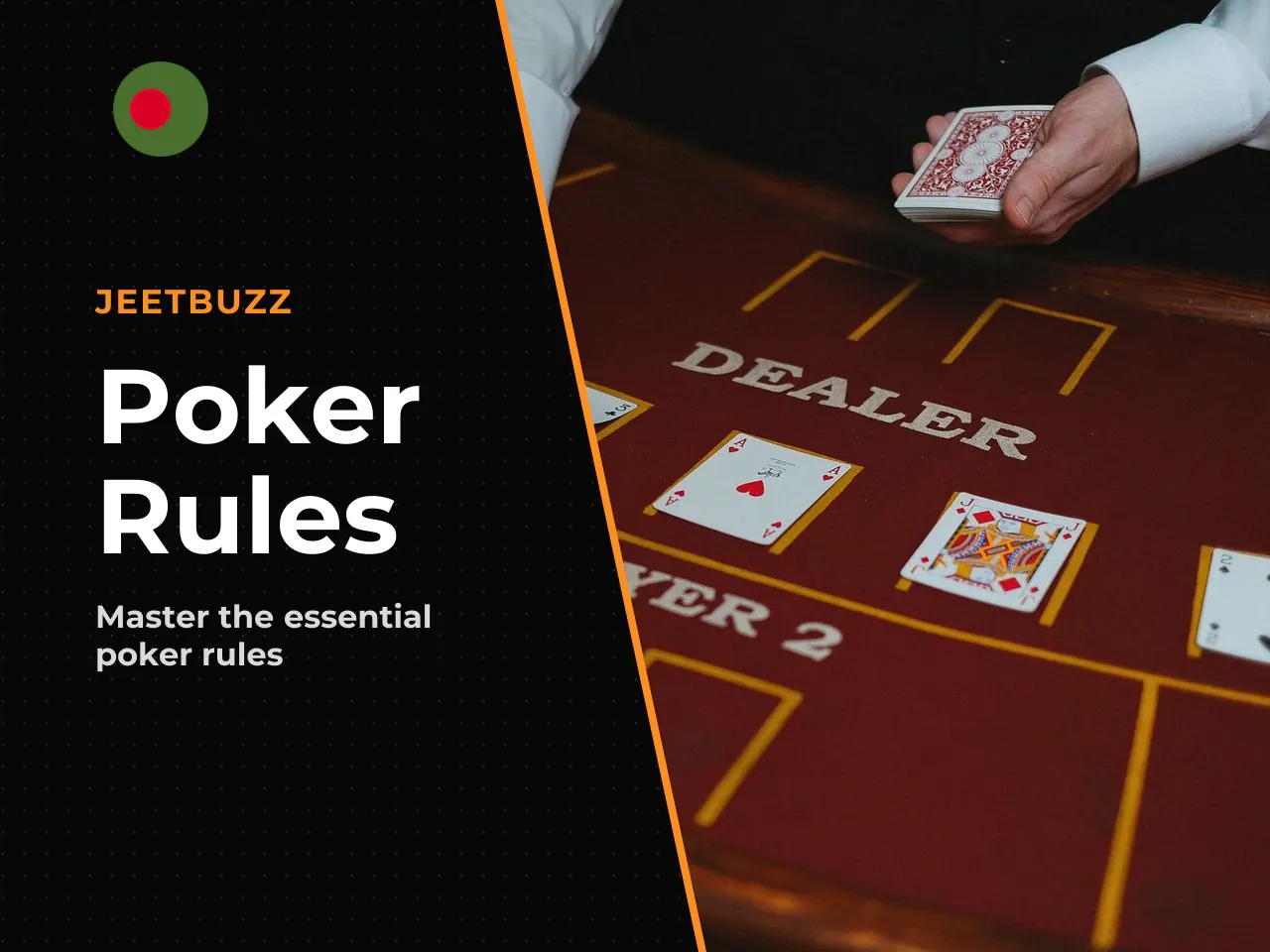
Each player receives exactly two cards face down — their "hole cards" or "pocket cards." These are private. Nobody else sees them until showdown.
Over the course of the hand, the dealer places five community cards face up on the board. These cards are shared by all players. Each player constructs the best possible five-card poker hand using any combination of their two hole cards and the five community cards. You may use both hole cards, one, or — in rare cases — neither, if the board itself forms the best hand.
This structure creates a fascinating tension. You know your own two cards, but you're guessing about everyone else's.
The community cards gradually reveal information, and each new card can dramatically shift the balance of power.
Important clarification: In Texas Hold'em, you play against other players, not against the dealer. The casino or online room earns revenue by taking a small percentage of each pot (called the rake). This is different from Casino Hold'em, which is a separate game where you play against the house.
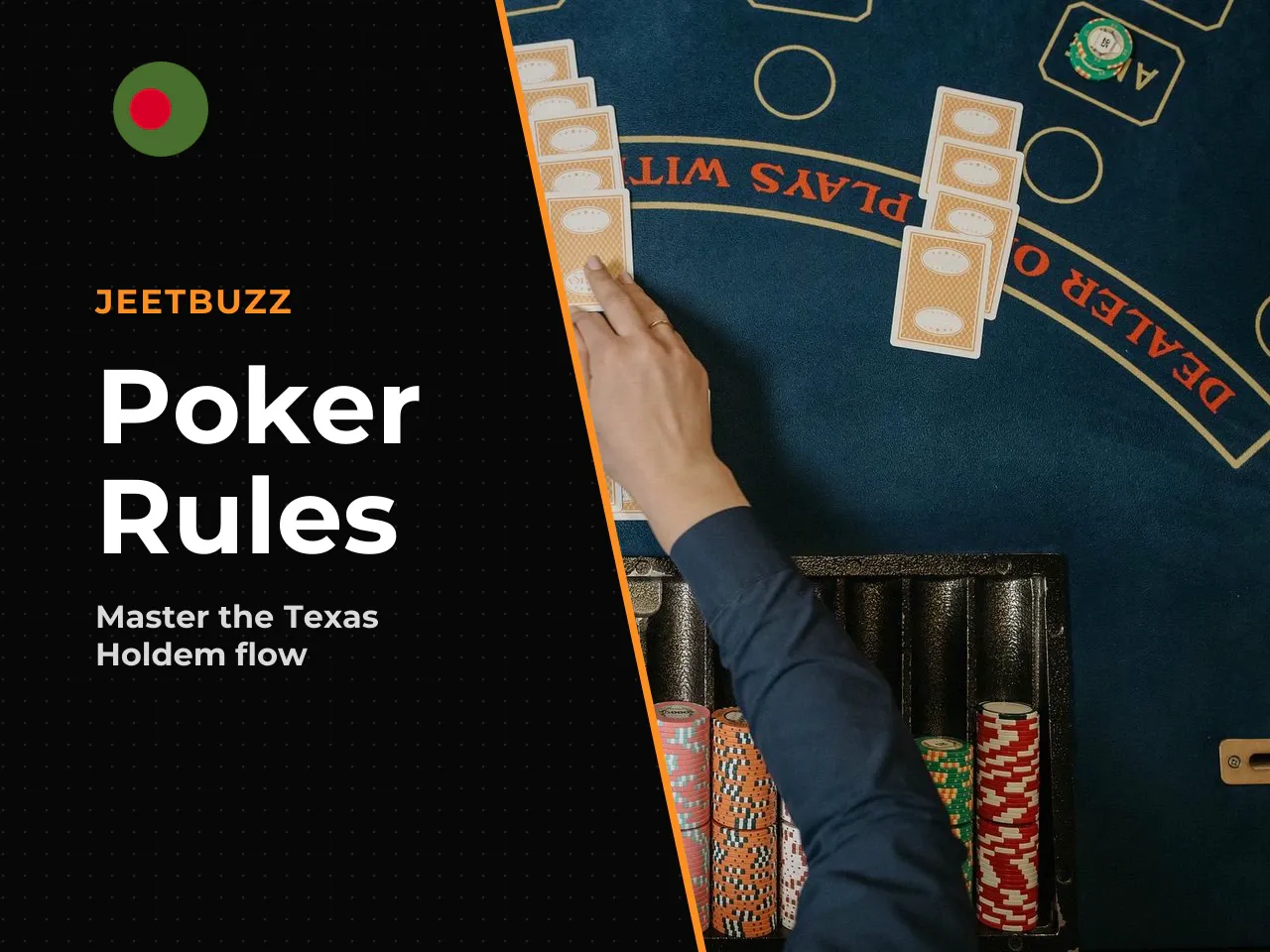
Here is how a Texas Hold'em hand unfolds, step by step:
Each betting round introduces new information. The flop is often the most dramatic moment — three cards appear at once, and the texture of the board (suited, connected, paired) immediately shapes the strategic landscape. The turn and river each add one card, narrowing possibilities and raising stakes.
What makes Texas Hold'em poker so strategically rich is the interaction between position, bet sizing, and incomplete information. A player on the button sees everyone else act first, gaining a persistent informational edge. A player under the gun must act with minimal data. This asymmetry drives most of the game's complexity.
While Texas Hold'em dominates online traffic, understanding other types of poker enriches your knowledge and may help you find a format that suits your temperament better. Some players thrive in the action-heavy world of Omaha. Others prefer the memory challenge of stud poker. Variety exists for a reason.
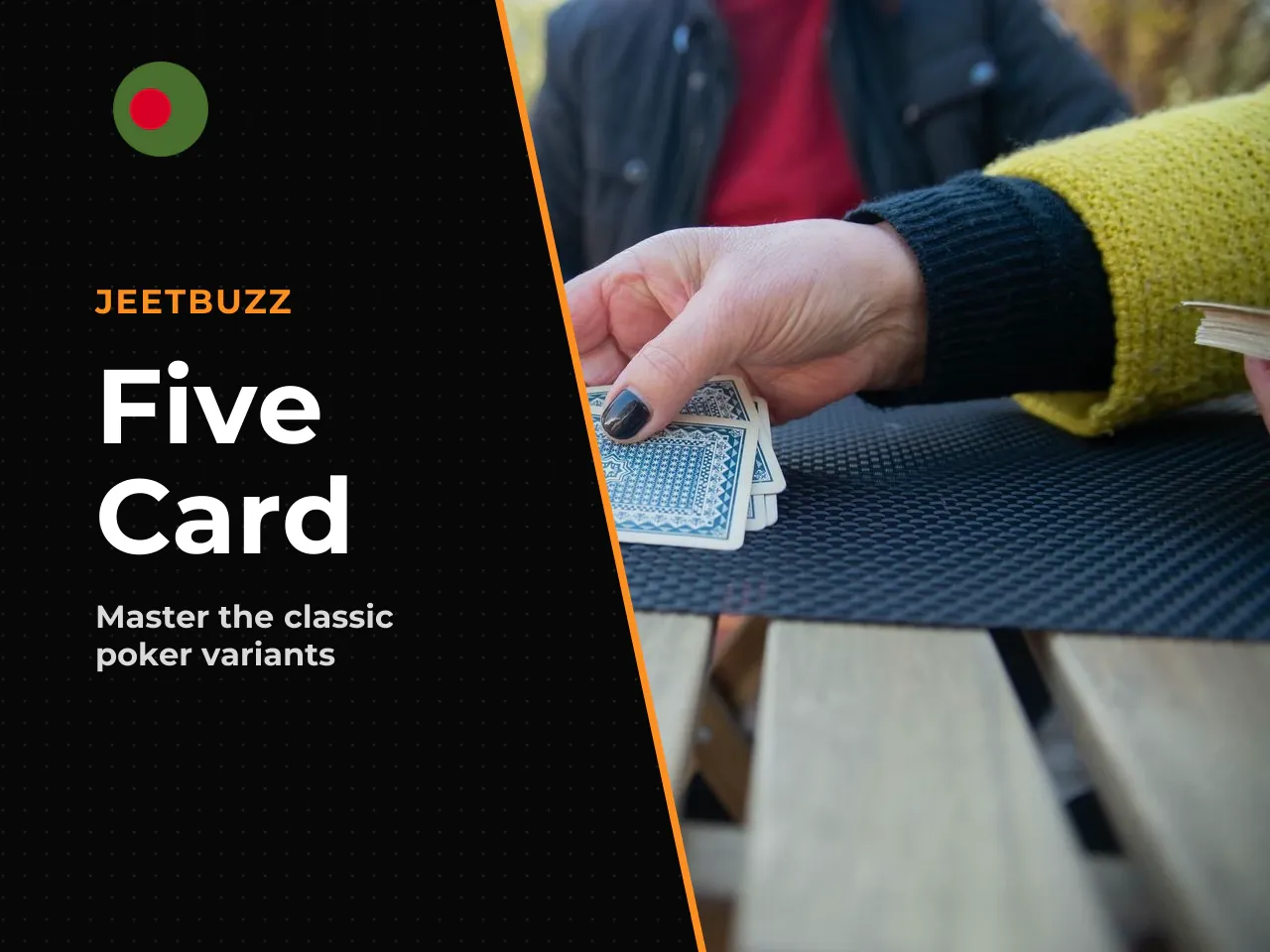
Draw poker is the oldest and simplest family of poker games. In Five-Card Draw, each player receives five cards face down, bets, then may discard and replace from zero to five cards in a single draw phase. A final betting round follows, then showdown.
The mechanics are straightforward — no community cards, no exposed cards. But strategic depth still matters. How many cards did your opponent draw? Did they raise before the draw or after? These clues, combined with bet-sizing tells, create a reading game that rewards attention.
Five-Card Draw is excellent for absolute beginners because it strips poker down to its essentials: hand strength, betting, and bluffing. A study from St.
Cloud State University examined the role of experience in video-poker games and found that player experience significantly influenced play quality and outcomes — highlighting that even in simpler five card formats, a genuine learning dimension exists.
Before the community-card era, Seven-Card Stud was the dominant poker game. Each player receives seven cards over the course of the hand — three face-down and four face-up — and makes the best five-card hand from those seven. There are no community cards. Every opponent's visible (door) cards are unique to them.
This changes the game fundamentally. In Hold'em, you share the board with everyone. In stud poker, you must track every exposed card around the table to estimate opponents' holdings. Did two of the four remaining Jacks already appear in other players' up-cards? That information directly affects your drawing odds. Memory and observation become central skills.
Razz is the lowball version of Seven-Card Stud, where the lowest hand wins. It's a niche format, but it teaches you to think about hand rankings in reverse — a useful mental exercise.
A few other variants worth knowing:

Free play is a valuable learning tool, but it has limitations. Players at play-money tables often behave unrealistically — going all-in with junk hands because nothing is at stake. You'll learn the interface and the flow of the game, but you won't learn how people actually play when money is on the line.
The transition to real money, even at micro-stakes, introduces a completely different psychological dynamic. Suddenly, folding feels like losing something. Calling feels like a commitment. That shift is part of the learning process, and it's better experienced at the lowest possible stakes.
Nearly every licensed platform provides play-money tables, freeroll tournaments, and beginner-only lobbies. Use them. But don't mistake play-money success for real-money readiness.
Understanding the fundamental difference between cash games and tournaments helps beginners choose wisely:
For most beginners, cash games at micro-stakes are the simpler starting point because chip value is transparent and linear. Tournaments add layers of complexity (blind escalation, ICM, bubble dynamics) that are easier to appreciate after mastering cash-game fundamentals.
Bankroll management essentials:
When evaluating licensed online casinos with poker offerings, cross-reference licensing, RNG certification, beginner-friendly features, and available payment methods to make an informed choice.
Important: Online poker involves real financial risk. Only play on licensed and regulated platforms. Set deposit limits, loss limits, and session time limits before your first hand. If gambling stops being enjoyable, stop. Resources like GamCare (gamcare.org.uk) and BeGambleAware (begambleaware.org) offer free, confidential support.
Authoritative poker training platforms — including Upswing Poker and Run It Once — consistently identify the same destructive patterns among new players. Avoiding these mistakes won't make you a winning player overnight, but it will stop the fastest leaks.
Beginners frequently overvalue an overpair while ignoring potential straights and flushes on the community cards. For example, holding A♠ A♥ on a board of K♣ Q♣ J♣ 9♣ might feel strong — but any opponent with a single club has a flush, and multiple straight combinations are possible.
This is, honestly, one of the hardest skills to develop. Your brain wants to celebrate the Aces. The board is telling you to worry.
How to improve: Before betting, pause and mentally list all hands that beat yours on the current board. If several plausible holdings crush you, proceed with caution. Some players find it helpful to literally whisper the threats to themselves: "flush possible, straight possible, two pair possible." It sounds silly. It works.
Evidence from error analyses in computer-science contexts confirms that flush and straight detection are cognitively more challenging than recognising pairs — even for people trained in pattern recognition. Give yourself permission to take an extra second.

This is the classic beginner leak. Statistical analyses of large online poker databases (via tools like PokerTracker and Hand2Note) show that players who voluntarily put money into the pot (VPIP) more than 30–35% of the time lose an average of 5–15+ big blinds per 100 hands over significant samples. The most profitable 10% of players at micro-stakes maintain a VPIP of approximately 18–24%.
Why does this happen? New players get bored. They want action. They convince themselves that 9♦ 4♣ "could hit something." It could. It usually doesn't. And the chips you invest in marginal hands add up faster than you'd expect.
How to improve: Tighten your starting hand selection. Fold most hands from early positions. Focus on playing strong hands aggressively from late positions (cutoff, button). The button is the most profitable seat at the table — use it.
Other common mistakes worth watching for:
A structural characteristics study (2023) found that factors like bet limits and event frequency explained only 7.7% of variance in the number of games played per online gambling session, suggesting that individual differences — discipline, self-control, emotional regulation — play a much larger role than game design in determining outcomes.
Disclaimer: The information in this section is general in nature and does not replace consultation with a qualified professional. Gambling carries the risk of financial loss. If you or someone close to you experiences problems with gambling, seek professional help.
Research into the psychological effects of online poker reveals a nuanced picture. A systematic review published in 2023 found that skill-dependent games such as poker are particularly attractive to young people, who perceive them as contests of skill rather than gambling — fostering illusions of control that can lead to problematic behaviour.
The genuine skill component in poker can lead players to overestimate their edge and underestimate variance. The 24/7 availability and high hand volume of online poker compress the feedback loop, potentially accelerating both learning and losses. And digital chips can feel less "real" than physical cash, lowering psychological barriers to larger bets.
Licensed online poker platforms in regulated markets (e.g., UKGC, MGA jurisdictions) are required by law to provide harm-reduction tools:

A cross-sectional study of internet poker players found that 53.4% of respondents rated monetary deposit limits as "very or extremely useful" as a harm-reduction tool. In 2024–2025, regulators such as the UKGC and organisations like GamCare emphasised that players should proactively use self-limitation tools — not wait until problems arise.
A 2023 study by Hakansson and Komzia analysing national self-exclusion data found that a non-trivial proportion of self-excluded individuals managed to gamble despite being excluded, indicating that enforcement and cross-operator coordination remain critical areas for improvement.
Practical responsible gambling checklist:
Disclaimer: The regulatory information above is general and may not reflect the current legislation in your jurisdiction. Verify online gambling rules with licensed operators and local regulators.
Respuestas renderizadas en formato acorde al diseГ±o exportado: tarjetas oscuras, acento dorado y despliegue compacto.